

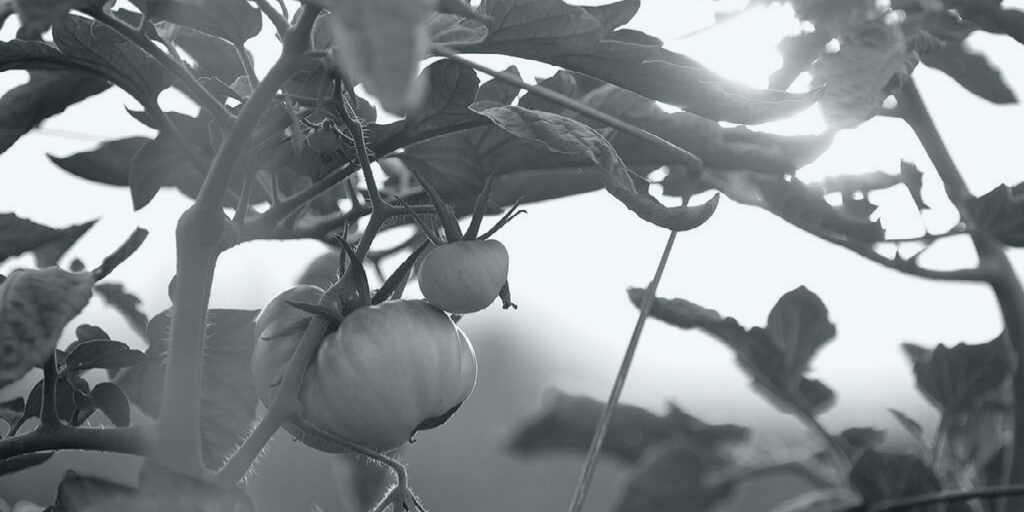
Providing for at least some of your own food needs is an important element of going green. Thinking about what we eat and where it comes from is vital if we are to live more ethically and sustainably. Fortunately, growing your own is simple. Some people might be surprised to learn that it is possible to grow some food with very little space and even less money. It is easy to grow a wide range of salad crops, herbs and other fruits and vegetables on your windowsills, on a balcony or a small patio. Here are five tips to help make the most of small spaces and create a small fruit and vegetable garden that will be the envy of friends and neighbors.
Vertical Gardening: Think Upwards As Well As Outwards
One mistake people often make when thinking about how much growing space is available to them is to think only of the ground area - a 6-foot by 12-foot balcony, for example. Doing so is to ignore all the potential of the vertical space. By making wall frames, hanging baskets and placing trellis for plants to climb up, you can considerably increase the amount of growing space you have available. Even in an apartment with only windowsills to grow on, you might be able to consider a clever arrangement with window boxes and hanging containers that will allow you to grow things up against the outside wall. You may even be able to get together with neighbors to garden on a roof or to create a living wall of plants. Vertical gardening opens up a whole new world of possibilities.
Reduce, Reuse and Recycle
When creating your small edible garden, do not be tempted to go out and buy a lot of containers. Instead, consider the potential of your household trash. Plastic bottles, and yogurt, butter, or ice cream tubs can all be used as containers in a small garden. Looking beyond your own home, other waste products such as gallon food/drink containers, old barrels and wooden pallets can all be had for free or for very little money and these will be wonderful as planters in a small space. Use your imagination and construct framing for vertical gardens from scrap wood and whatever other items come to hand.
You will likely have to purchase some potting soil/ general purpose compost to get you started, unless you have a friend or neighbor willing to help you out with some growing medium. This is not too expensive, however, and you can soon make sure that you will have your own supply of compost in the future. Even when you have little or no outside space, you can still create your own compost by placing vegetable scraps and cardboard in a small worm bin. 'Tiger' worms can be purchased online inexpensively and these worms will help break down your kitchen waste into a valuable planting medium. Creating your own compost is a good way to ensure the continued good health of your edible garden. It will also help you live a more eco-friendly life, by reducing the amount of waste you send to the landfill.
Before you buy lots of seeds, consider asking friends, family and neighbors if they have any seeds or cuttings to spare. Often, other gardeners in your community will be delighted to help you get started and this can save you money, or try the Seed Library at the Benjamin L. Hooks Central Library. If you do need to buy seeds, these can be bought inexpensively online. If you are a novice, consider starting with easy plants such as salad leaves, radishes, peas and potatoes (which can be grown in large solid containers or grow bags), and then expand your repertoire from there. A variety of herbs is also very easy to grow on a windowsill or in a small outside space.
Harvest and Conserve Water
While you can water with tap water, rain water is much better. No matter how small your space, you should do your best to harvest what rainwater you can and make the most of that water in your garden. The easiest way to harvest rainwater is to attach a rain barrel to the end of a downpipe to collect the water from your roof. However, if you live in an apartment, then this is not always so straightforward. You may be able to collaborate with your neighbors to share the water collected from the roof of the building. Alternatively, it may be possible for you to collect water in a smaller way for your own use by rigging a device on a balcony, on shared roof space, or from a window. Think imaginatively about how you can harvest water.
Water conservation is another important part of the puzzle. In a container garden, sensible and considered use of water is vital as plants in containers will dry out faster than those in the ground. You can use mulches, shading, wicks and clay pot irrigation to give plants only as much as they need and no more. This can reduce water use considerably.
Use Edges and Value The Marginal
When you only have a small space, it is more important than ever to ensure that you are using every inch of the area as well as possible. In nature, the edge between two different environments is the most productive and biodiverse - the edge of a woodland, for example. You can take advantage of the edge effect, even in a small garden, by planting around the edges of your containers. Consider how you might be able to make use of neglected and under-utilized space where you live - not just on windowsills but perhaps also in communal stairwells or on roofs.
Layer in Space and in Time
Taking full advantage of the space you have is not just about filling the physical space, it is also about making sure that your containers are full for as much of the year as possible. You can achieve both of these things by layering the plants, both in physical space and through time. For example, if you are growing some peas, consider growing salad crops and radishes at their feet so they can take advantage of the shade they provide in the summer. If you are growing cabbages in a container or raised bed area, consider interplanting these with a swift growing lettuce. The lettuces will be harvested before the cabbages get big enough to need the space. There are many such examples of ways in which you can companion plant crops and enjoy a range of beneficial interactions.
By considering the above, everyone can enjoy an edible garden, no matter the situation or circumstance.
